Introduction
Teri Ryan from Olansky Dermatology and Aesthetics joins Pathmonk Presents to share how a four-clinic practice blends dermatology expertise with aesthetic care to build long-term patient relationships. She explains how Olansky stands apart from trend-driven med spas through board-certified dermatologists, experienced aestheticians, and a strong focus on education, trust, and compassionate care.
The episode also explores how existing dermatology patients can become aesthetic clients, how community events and digital channels support growth, and why website simplicity matters for scheduling and access. For marketers, healthcare leaders, and clinic operators, this conversation offers practical insight into relationship-led growth, patient conversion, and creating trust across every touchpoint.


Increase +180% conversions from your website with AI
Get more conversions from your existing traffic by delivering personalized experiences in real time.
- Adapt your website to each visitor’s intent automatically
- Increase conversions without redesigns or dev work
- Turn anonymous traffic into revenue at scale
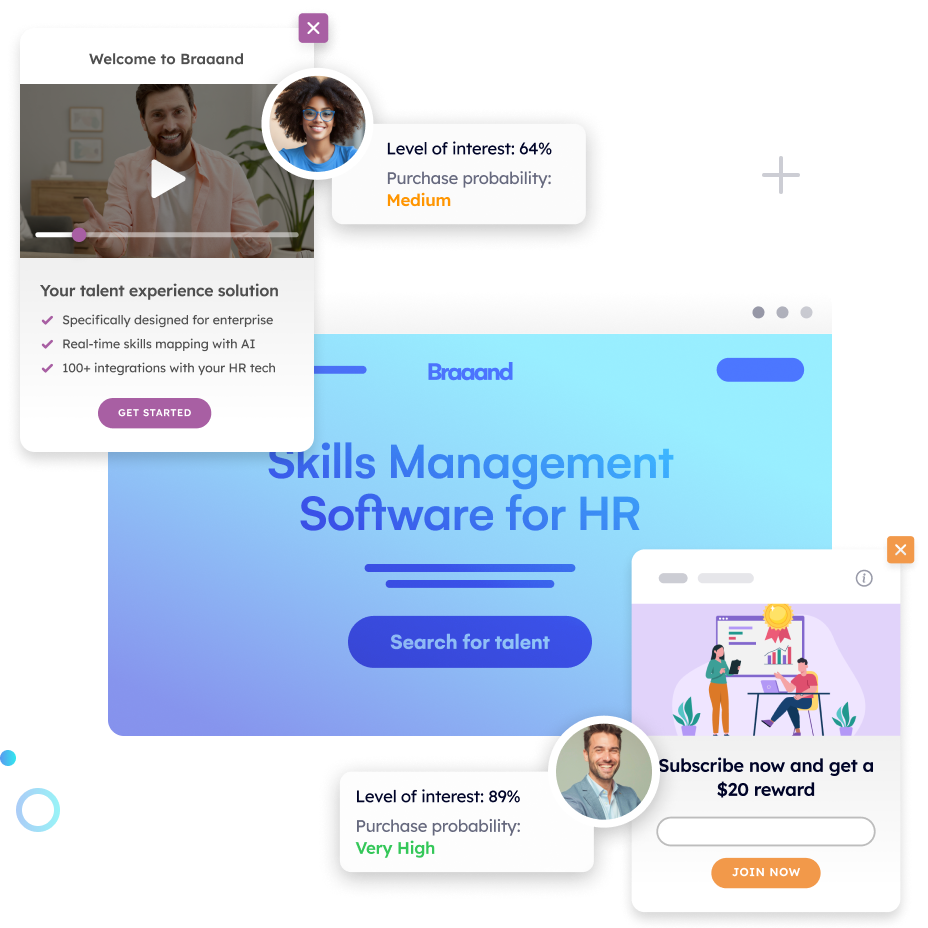
Rick: Pathmonk is the AI for website conversions. With increasing online competition, over 98% of website visitors don’t convert. The ability to successfully show your value proposition and support visitors in their buying journey separates you from the competition online. Pathmonk qualifies and converts leads on your website by figuring out where they are in the buying journey and influencing them in key decision moments with relevant micro experiences like case studies, intro videos, and much more.
Stay relevant to your visitors and increase conversions by 50% by adding Pathmonk to your website in seconds, by letting the AI do all the work, and increase conversions while you keep the marketing as usual. Check us out on pathmonk.com.
Hey, everybody. Welcome back to Pathmonk Presents. Today, we’re joined by Teri Ryan. Teri is the regional manager at Olansky Dermatology and Aesthetics. We’re happy to have her and excited to jump into this conversation. Teri, welcome to the show.
Teri Ryan: Thank you so much.
Rick: Of course. As I said, excited to get it going, Teri. Maybe we start with the basics. Tell us a little bit about Olansky Dermatology and Aesthetics. Tell us, what’s the big idea behind your clinic, and if you were explaining this to a friend over coffee, how would you describe what you do, what your role is?
Teri Ryan: I’m the regional aesthetics manager for Olansky Dermatology. We’re a four-clinic dermatology and aesthetics practice. My role includes visits to all four of our clinics.
I am all over the place and managing our aesthetics department. Our practice is unique in that we really pride ourselves in being patient, team, and community-focused, so that we can provide compassionate skin health for our patients across their lives. I am guiding our aestheticians and our aesthetic injectors so that they can serve our patients in a way that helps them feel aligned with who they are on the inside matching up with how they present themselves to the world.
Rick: That sounds like a hard job, to be honest with you, Teri. As you said, you’re all over the place, and of course physically too, right? Checking with the other businesses essentially, right? They’re all separate businesses. They’re all part of one.
But I’m curious ’cause you just touched on your, in marketing lingo, that would be the ICP, the ideal customer profile, right? So in this case, we’re talking about patients. It’s a little bit different from what we’re typically used to talk about. But tell us a little bit more about your patients, the type of, essentially, clients that come in, and what are they typically looking for?
What’s the key problem that you would say you help them solve, on Olansky?
Teri Ryan: Yeah, I love that question, and I’m always trying to know our patients in that way, and why they would choose us. And we are really different from your typical med spa in that we are board-certified dermatologists.
Our aestheticians have been working within a medical practice, for some of them, decades. And so our patients come to us because of our knowledge and our experience in not following trends. With TikTok and Instagram, it’s really hard to know what skincare trends are worth the money or the time and which aren’t. And so the patients that come to us, they really want us to share our expertise and our knowledge, and we really try to give that to them.
Rick: That’s amazing. Even just for the nature of the business, people do need education, I’m sure. They might have so many questions when they come to you, and maybe even confused by the trends that you mentioned on TikTok or the skincare routines or whatever product is trending at the moment, right?
In all of that confusion, I’m sure they need someone to actually, as a guiding light, if you will, to help them go through maybe a specific treatment or something that they’re looking for. Now, I’m curious, how do most of these people discover you eventually? And to get a little bit more technical, are there any marketing channels that have become your go-to for bringing in more of those people?
Teri Ryan: Yeah, that is a great question. We want to capitalize on the patients that we have here in dermatology to convert them to our aesthetic patients. We feel strongly that the best customer is the one that’s already in the building, right?
So our dermatology patients are coming here often because they don’t have a choice. They have an eczema flare-up, they’re struggling with acne, they’ve got warts. And so when they come in here and see our physician, a lot of times, they have the question, “Thank you so much for my eczema, but I’ve got some lingering hyperpigmentation or scarring,” or, “Oh, while I’m in here, what can I do about these wrinkles?”
And we really try to take every advantage of those patients and convert them over to our aesthetic department. We use a software called MedCenter, actually. So whenever a patient is in our dermatology clinic, that provider can drop a note into MedCenter that gets to our aesthetic team, and then we’re following up on those leads. We’re calling them, we’re sending text messages until we get them over to the aesthetics department.
We do use the other typical channels for marketing, our website. We’ve got Instagram, Facebook, LinkedIn. And we do a lot of, going back to our values as a practice, a lot of community-focused events. We just this past Saturday did free skin checks at the local farmers market. It’s a great way to get out in the community, people that don’t realize we’re just down the street.
Rick: Yeah, I love those initiatives, ’cause typically, maybe you’re out and about, just going about your day. You’re going to the market, you’re looking for produce, and then you are reminded somehow that you might need, that you are looking to book an appointment or maybe go do a check.
And so these pop-ups, this kind of presence essentially is a way for you to, of course, get more visibility, but also to show your expertise, to show the value of your services, and to get people eventually to the practice and start a journey, if you will, with them, right? That’s a great way to market yourself.
Teri Ryan: Relationship.
Rick: Of course. Of course. Yes. And that’s a huge one.
Teri Ryan: Things are changing. Things are changing so much with online marketing, I think. There’s so much of it. It has the real potential to just be like spam.
I find myself not really looking at it so much. Why we have so much success referring our dermatology patients to our aesthetics department is that trust is already built in. And really spending time this year trying to take that same trust that we have in-clinic and put that out there into our marketing as best as we can.
Rick: That is a great point, specifically about relationships just in the sense that at the end of the day, whatever service you offer, whatever product you sell, even, you know the saying, people buy from people. So if you don’t connect somehow on a human level with them, then it’s gonna be really hard that they’ll trust you, that there’s a plethora of issues really that potentially stem off of that.
Of course, in person is the best, but I have to ask about the channels and the marketing. Of course, most of our listeners here are interested in understanding, okay, how do you get these people in, right? So one of the questions that I wanted to ask you is about your website.
How much of a role does your website play in pulling in new consultations maybe, new business essentially? Is there anything about it that you think really works right now, or maybe things you got your eyes on improving?
Teri Ryan: With AI and all of the chats that are popping, that’s really changed how people find your website with SEO, and we’re working through some of those right now.
To be honest with you, we’re in that messy middle where we’ve seen some changes with how our website is or is not sending patients our way, and trying to reevaluate that and change with those times. I think adding more organic photos and doubling down on what we do best instead of trying to…
If you’re a millennial, you were probably taught that we really have to be well-rounded and be everything to everyone. And I think when we’re trying to do that on a website or on social media, that we’re nobody to anybody, right? And just trying to highlight and showcase what we really do well, even if it tends to move us a little bit more niche.
And so that’s something that, as I said, I’m just really in the messy middle right now with that and trying to figure that out and see what works. And really doing as much research and talking to experts as I can to hopefully guide us in stronger SEO standing.
Rick: No, that’s a great way to go about it. From your experience, Teri, maybe you just touched on it, right? You talked about the pictures and what actually makes a website convert, in your opinion? Is it something like that? Do you have maybe favorite tools or tactics, even, that have worked wonders for you to say, being a little bit more niche, as you said, working with your messaging?
What’s worked for you so far, and what do you think is actually still working after time that you’ve looked at the business?
Teri Ryan: Yeah, I think of course ease of scheduling. You don’t want the scheduling of an appointment to take too much time. Ease of information. If you’re trying to look something up on the website, like what are your hours, that needs to be visible.
I’m a strong believer in that you never wanna be a hassle to do business with, and so any popups tend to be annoying for patients. At times when we have to do that, if there’s an unexpected closure due to a snowstorm, which is huge here in Atlanta, if it snows everyone shuts down. Those sorts of popups tend to be aggravating to patients.
Trying to limit anything that’s annoying. And also putting our phone number up there. Anybody in the healthcare field, you’re seeing a wide range of ages that you cater to, and there’s always gonna be that older population that just wants to talk to somebody and ask a question, and making sure that is available to them, that they’re calling and they’re getting a live person on the phone so that the website does offer options beyond the website, right?
In that they can give us a call. So online booking, ease of information, and not being trapped on that website.
Rick: Okay. I like that ’cause it sounds like all the things you said, the easy scheduling, the phone number being available and easily findable there, are all basics in a way, right?
So get me to where I need to be, get me the information I need, and give it to me fast, right? All great things. Yes. The ABCs of a website essentially. Teri, I appreciate the knowledge and your experience you’re sharing here. I wanna switch gears for a second, maybe talk about you as a leader, as a regional aesthetics manager.
What’s a typical workday look like for you? You said earlier in the beginning, you’re all over the place, right? So what are the main things you focus on a day-to-day and what’s a day in the life of Teri like?
Teri Ryan: Great question. That is a constantly moving project for me.
I find that for years I have had the same morning and sort of end of the day routine, and those are pretty solid that I stick to. Starting from at home, I get up first thing in the morning, and I have journaled every day for years.
And it’s just a great way to kinda do a mind dump of what I’m thinking about that day, what I kinda wanna get done, how I’m feeling about doing that, and getting ready for work. I do not talk to people on the phone when I’m in the car. That’s my quiet time. Or I try not to.
And then getting into the office, I make a lap around whatever clinic I’m in that day just to say hi, let people know that I’m here. I sit down and do 30 minutes of email. I set a timer. It’s easy for me to just really get sucked in sometime, in just trying to answer what really needs to be answered.
And spending about an hour and a half working on minutiae and tasks so that in the afternoon when I’m more in a focus mood, I can focus on larger projects.
All that being said, this is healthcare, and there are gonna be 30 things that pop up that I hadn’t planned. And you just gotta be able to roll with it. So I do try to just allow for some flexibility in the middle of that day, otherwise you’re just gonna be miserable.
I have an alarm on my phone at 3:45 to remind myself the day’s ending and to try to begin that process of shutting it down. I like having the middle a little bit more variable too, just so I don’t get bored. If it was completely regimented all day long, that would make me sad.
Rick: I see that and I can relate to it personally 100%. I really like the structure that you have for the startup side of your day, you have pretty much strict rules around how much you value your time and your attention and focus, it sounds. And also at the end of the day, right?
‘Cause many people… I think that’s a great idea to set a timer and say, “Hey, this is shut down time. Don’t take on any new tasks. This is not a time for emails.”
You’re going into a, in a way you’re shifting into a different, even identity in a sense because I’m sure you’ll go home, and you’ll have your things to do, or your chores, and people you love, that you speak to, and it’s a different mindset, right? It’s a different pace even.
Having that structure, I think that’s really helpful. I’m gonna take a note for myself personally. I appreciate that.
Teri Ryan: Yeah, of course. Those transitions are important.
Rick: Agreed. Yeah. Speaking of transitions, Teri, we’re towards the end of our time together here on the back half of the episode.
So typically what we do to close off, before we wrap things up is a rapid fire segment, which does what it says on the tin, right? A few questions. Would you be ready for it?
Teri Ryan: Yeah.
Rick: Okay. So when it comes to consuming content, what’s the format you prefer? Do you prefer watching, listening, or reading?
Teri Ryan: Listening or reading.
Rick: Okay. So what’s the latest piece of content you picked up? It could be a book, it could be an article, whatever you read. And were there any ideas or gems that really stuck with you in it?
Teri Ryan: I am really obsessed with a guy named Eugene Healey and his Substack and his Instagram stories.
This is a smart guy based out of Sydney, Australia, and I love his discussions on branding, advertising, culture, and desire.
Rick: Okay. That’s gonna be something to note down for myself personally. I don’t, I’m not on social media as much, but a Substack I can definitely get behind. What’s the name again?
Teri Ryan: It’s cool. Eugene Healey. Perfect. H-E-A-L-E-Y.
Rick: Amazing. Thanks for that. If you had a magic wand, Teri, and you could fix one frustrating thing in your life with tech, in the practice, at home, wherever, what would you pick?
Teri Ryan: I’m getting at the age, I’m in my 40s, that I wish there was a way that I could extract some of what I know and put it in somebody else’s mind, without having to arduously explain my life experience that brought me to that conclusion. That would be, I’m introverted and would just love for somebody to read my mind.
Rick: Yeah. That would be great. And it will save some frustration at times, to be honest, just to even try to articulate something. It’s not without its problems, but it would be nice.
Teri Ryan: Sure. Sure. Yeah.
Rick: Yes. Agreed. Agreed. Maybe it’s related to this, maybe not. I have maybe a vague idea about what you’re gonna answer to this, but I don’t wanna assume. What’s one repetitive task that you’d love to put on autopilot forever?
Teri Ryan: Oh, lunch and dinner. The worst question in the world to me is, what are we eating for dinner? I am a creature of habit, and it’s just so simple to me to just have a particular lunch or dinner that’s a go-to so that I’m not also trying to think of that. I know that sounds silly. I do enjoy eating out and cooking on the weekends, but on the weeknight, I want the same three meals that are easy and on rotation.
Rick: Yeah. Quick story here. You get along just fine with my wife ’cause she hates it whenever I ask this question.
Teri Ryan: The worst question in the world.
Rick: And unfortunately, I think I passed it on to my son, ’cause the other day, as soon as he woke up, that’s what he asked. “Mom, what are we having for dinner?”
And so she messaged me right away and she said, “What did you do? What have you done?” And so I’m sure that’s something that we need to figure out as far as meal prep or something like that.
Teri Ryan: Yeah, just put it in front of me and let’s not think about it.
Rick: Fair enough. Fair enough. Teri, again, wanna thank you so much for being part of the show and for sharing your insights with us today. I also wanna give you the last word. If someone forgets everything about the interview today, what is the one thing that they should remember about Olansky, and the work you guys are doing?
Teri Ryan: We really value our relationship with our patients. We’re great in the rooms and we love connecting with everybody that walks into this building. It’s not just a mill where we’re trying to run as many people through as possible. We enjoy our time with our patients and we want them to enjoy their time with us.
Rick: Love it. That’s a great message and I’m sure people will appreciate the message essentially behind it. It’s quality over quantity, and there’s no better approach, I don’t think, at least, when it comes to healthcare. Yeah, caring about people, treating them well.
So thanks for that, Teri, and if people want to check you guys out, if people want to learn more about Olansky, how can they do that?
Teri Ryan: Yeah. We’re at olanskydermatology.com. Same handle for our Instagram. We are located in Atlanta, Georgia, as well as Roswell, Buford, and Cumming. You can give us a call at 404-355-5484, and we would love to see you at our practice.
Rick: Perfect. Teri, thanks again for your words, for your insights, and for letting us know more about Olansky and the way you think, even about your workday and the things you do. Before we say our goodbyes, Teri, I wanna say goodbye to our audience, and thank you again for everything you did with us today.
Thank you so much.
Teri Ryan: Thanks so much for having me.
Rick: All right. See you soon, everyone.