Introduction
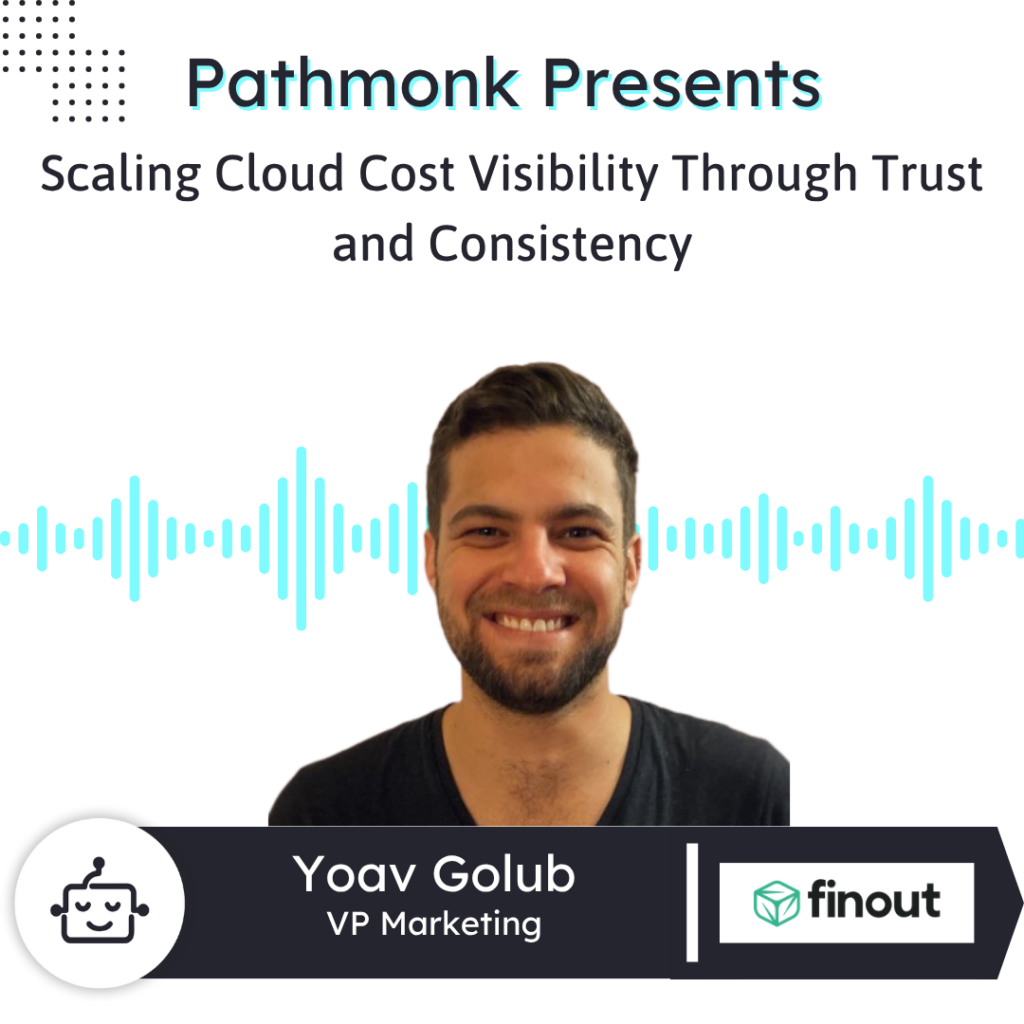
Yoav Golub, VP of Marketing at FinOut, joins Pathmonk Presents to explain how the company helps large organizations and SaaS businesses understand, allocate, and optimize complex cloud and AI infrastructure spend. He shares why FinOut stands out in environments with multi-tenant systems, fast-moving teams, and rising AI costs, where companies need visibility into who spent what, why, and how to improve efficiency.
The episode also explores a modern demand generation mix built around conferences, field marketing, SEO-driven inbound, social proof, and website journeys that match buyer readiness. For marketers and growth leaders, it offers sharp insight into trust-led conversion, category education, and consistent content execution.


Increase +180% conversions from your website with AI
Get more conversions from your existing traffic by delivering personalized experiences in real time.
- Adapt your website to each visitor’s intent automatically
- Increase conversions without redesigns or dev work
- Turn anonymous traffic into revenue at scale
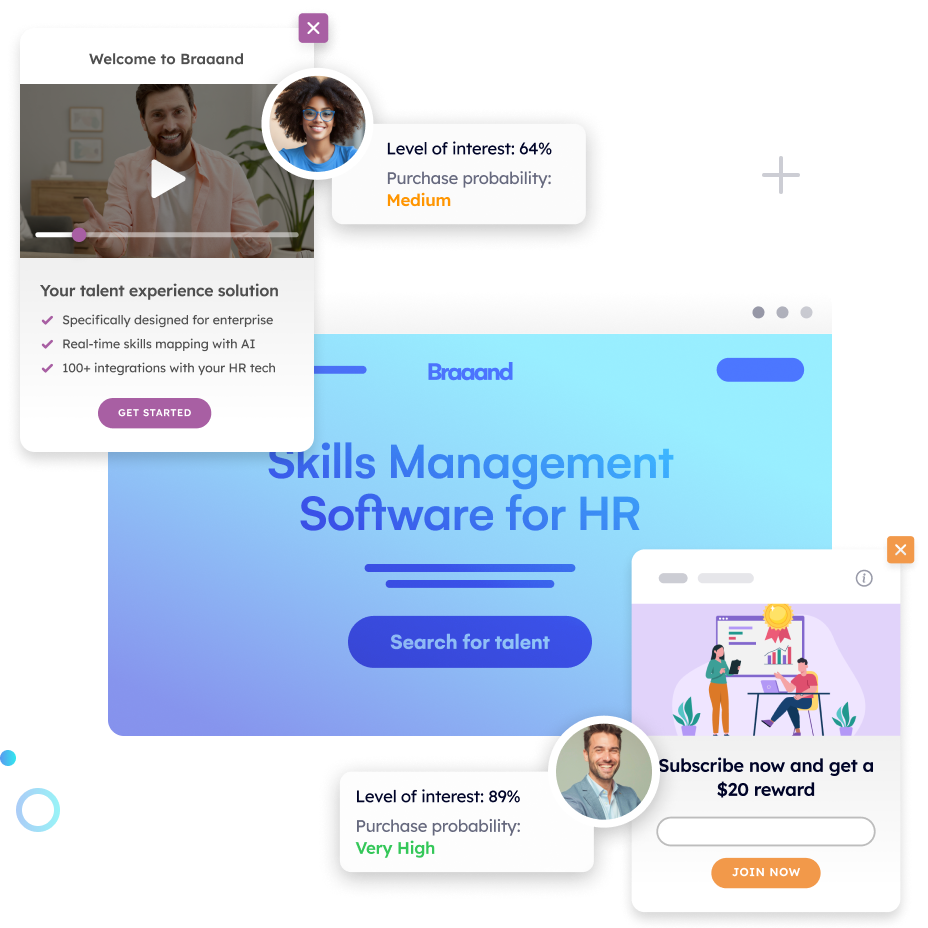
Rick: Pathmonk is the AI for website conversions. With increasing online competition, over 98% of website visitors don’t convert. The ability to successfully show your value proposition and support visitors in their buying journey separates you from the competition online. Pathmonk qualifies and converts leads on your website by figuring out where they are in the buying journey and influencing them in key decision moments with relevant micro experiences like case studies, intro videos, and much more.
Stay relevant to your visitors and increase conversions by 50% by adding Pathmonk to your website in seconds, by letting the AI do all the work, and increase conversions while you keep doing marketing as usual. Check us out on pathmonk.com.
Hey, everybody. Welcome back to Pathmonk Presents. Today we’re joined by Yoav, he’s the VP of marketing at Finout. Yoav has been there for about five years now. The company has grown like crazy. But before I get ahead of myself, I wanna let it come from you, Yoav. Let’s start with the basics. Let’s talk about Finout, and if you were explaining this to a friend over coffee, right? ‘Cause I know we’re both sipping coffee. What is Finout about? And what would you say is your role in Finout?
Yoav Golub: So first of all, Rick, thank you for having me. I appreciate your time and the opportunity to talk to everybody.
My role as the VP of marketing in Finout is essentially everything that comes out from the hard work of Gal and the product team in releasing it to as many people and create a unique voice that will resonate with relevant individuals, both in the industry that we’re working on, which is FinOps, cloud and AI cost management, understanding what the company actually spends the infrastructure cost on, and then kinda transitioning it into actionable items and how they can improve their bottom line.
In this, my role is both to empower the brand and make sure everybody understands the offering, articulate it, and entice them and give them a little bit more of a willingness to come back and talk to us when they have the right need at the right time. Okay. Make sense?
Rick: It does, absolutely. And in fact, I’m actually curious about a little about the companies you work with, because of course, FinOps is big for every company. You’ve got to look at your finances. But are there certain types of businesses or industries where you feel Finout really shines, and is there a key problem that you have to solve at the moment when people come to you?
Yoav Golub: Definitely. Finout, while vertical agnostic, really shines in large organizations that have, or SaaS companies that have a complex cloud infrastructure and AI spend, and they find it a bit challenging to manage them, because of multi-tenancy environments and different stakeholders at the company that move the infrastructure on different areas, and they can’t really understand what they’re paying and why.
And if you want to take the AI angle that now is very prominent, then you’re releasing new feature based on AI, and it makes sense it will cost you certain amount of tokens or spend on your cloud, but then what’s happening on the other side is you’re getting that shock bill of oh, we spent 30% more of that team ran this kind of simulation and, or work on that environment that it broke the model. What’s going on?
And we’re able to articulate it back to the company and say, “Not only this is what you spent, but who spent it, why, and how you can improve it.” And the bigger the infrastructure, the more complex it is, the faster the changes are happening. And with AI, it’s happening very fast. The more Finout shines, and that’s like one of the big reasons for that amazing growth.
It’s not marketing. That’s a company that can actually deliver. It’s really easy to understand if there are results on the other hand, in the other end of actually valuing the platform. So I can do the best job in the world, but at the end of the day, if they don’t get the answers they need and the control they want, it doesn’t work.
Rick: Yeah. No, that’s a fair point. It’s the nature of referrals, word of mouth, it works both ways, right? If you do a great job, then that’s how you grow. If you do a bad job, that’s also how, unfortunately, that’s that constructive criticism.
But many companies bunk due to that reason, right? They market really well, they don’t deliver, and then there’s mismatch in expectation and then it just goes to show maybe there’s something to fix here. You know what I mean?
Yoav Golub: I will add one more thing, it’s a marketing conversation. So I really like the Clay model, if you want, of social proofing, and I really appreciate the way of internal marketing the internal solution, which is doesn’t really matter how complex the offering of Clay is. If you go around and you understand what they solve to those kind of companies, the hard part of the marketing is over.
So meaning if I can, for example, in Finout’s case, if I can showcase Finout solves complex cloud and AI cost management to companies like Wiz that Google bought for $40 billion, or Lyft or Tenable or Elastic, for example, CCCS and so on, then it goes to reason that while a new prospect might have a complex environment, it also means that we have the ability to help them.
And we really appreciate our customers. We celebrate our customers. It’s a big part of our campaigns, and we take a lot of effort in making sure that we resonate with them regarding their success and what we can help them more. ‘Cause at the end of the day, and that’s again, it’s more of a combination of product and marketing strategy.
We’re only as good as the success of our customers, and everybody are gonna AI wash their product and say, “We’re doing this,” or, “We’re doing that,” and we can help. But if we can showcase success, then everything else is really irrelevant ’cause we can talk to the actual people.
And when you compete, maybe a better word, with industry giants like IBM and Broadcom, and those Gartner Magic Quadrant, and people need to understand if a small company, small startup at the end of the day, can really do what they need, or they need to go to those giants, and they see that social proof, that’s everything they need. They can talk to that person. They can really understand the value. So that’s super important for me.
Rick: Of course. And I wanna stay on that note for a second. You were talking about the growth and, essentially, your customers are your best champions, right? They’re showing and they’re talking about the product.
Now, I’m curious to how people discover you, right? That’s gotta be a big part of it. But the other side of this is that are there any marketing channels that become your go-to, let’s say, for bringing in more and more customers, more users, if you will?
Yoav Golub: So you’re asking what’s the demand gen strategy, just to reword that, and how do we bring more volume?
So I would say our marketing strategy split into three main pillars. Pillar one, which we found success from day one, is conferences, events, field marketing, everything that is human to human. In a world where there’s so much competition, such as cloud cost management, and it’s really hard to differentiate between different solutions to do different stuff, and it’s not always with, you need to understand, to justify why you pick a specific vendor, interpersonal connections is key.
I can do the best website in the world, the most elaborate AI GTM motion based on crazy n8n flows. If there’s no person on the other side, nobody’s gonna trust me and buy my product. But if I’m standing in a conference, and this is something I heard numerous times in the past, and I’m talking to someone and I understand the problem, and I’m here to help them, and I say I can help them, then they actually evaluate the platform. They see they can. I build that kind of trust.
No amount of paid campaigns on LinkedIn would bring me this kind of trust or payoffs of, “Let’s do a demo for 100 bucks,” or those kind of things. Sounds cool. It maybe will help change a small number in your metrics, but it won’t convert into closed one. I forcibly don’t believe in it. I think it has value in certain areas, but it can’t be the driving force behind your go-to-market strategy.
So that’s one. I said conferences, events, interpersonal connections is key empowerment to success. And B, inbound marketing based on SEO in the past, and today GEO, AEO, pick your poison.
This is a relentless, sometimes aggravating, very consistent work that demands both generating a lot of content, but also keep improving it, evaluating it, and creating this kind of flywheel of finding new opportunities, being in the right time, right place, optimizing the funnel, and adding more.
It’s not just a Claude or whatever, ChatGPT generator of blogs. That’s not gonna work. Anybody can do that. But generating a smart flywheel that understands what’s working and then builds on it, and using and empowering our leaders and their thought leadership into the website, this kind of systematic methodology is key in building a brand.
And last thing is just consistency. You wrote an amazing blog. Good for you. Next week we need another one, and we need new ideas and fresh stuff. It never ends. It’s a hungry machine.
Rick: I like that. The hungry machine just kinda paints a picture, right? And you just touched before that point, before the consistency, you were talking about the flywheel and, essentially, how do you feed more people to the website?
Now, our listeners will know Pathmonk is a website tool, right? So I’d be remiss if I didn’t ask, how much of a role does your website play in pulling in new customers, and is there anything about it that you’ve seen work great when it comes to conversions? Maybe it’s a framework that you rely on. Maybe it’s a specific tool. But what comes to mind when you think about our website, Finout’s website converts so well because XYZ?
Yoav Golub: I think that’s a complicated question in a way that every industry is a little bit specific. I would say that by creating, and I wrote a post about it on LinkedIn a couple of weeks back, it took me probably three years of constant work and content updates to come to a point that right now we’re getting daily demo requests and pricing requests, and I’m talking years.
So even if I optimize the hell out of everything, and I’m now building everything from scratch, I don’t believe I can build it in three months. Just by consistency and keep going, and keep adding, and keep optimizing. That’s key. So consistency is above all what’s important.
I hope that’s a part of your question. I would say that understanding industry trends and the blogs that are committed to the trends is easier said than done. Let’s say, yes, AI. Okay, but everybody writing about AI, so what the right keyword or the right questions in GEO that people are asking to bring the right personas back to our content on the website.
And then there’s a funnel to build inside the website that is gonna filter out people that are just curious, which is great, and we’re gonna circle back into more relevant elements inside the website, and then into an actual opportunity that, hey, so I wanna evaluate the tool because my need is high enough in complexity to need an actual third-party solution.
For example, we can go from, let’s say, we’re talking about cloud pricing. We talked about AI cost management. So we move from, hey, I wanna learn more about cloud pricing into maybe a calculator that says, okay, how much I’m gonna spend on cloud if I’m gonna build this environment, so he learns a little bit more.
Then it’s okay, it seems like you’re gonna have a challenge in six months to a year. You need to start thinking of a solution. Then we’re gonna bring it down again into a build versus buy. So he can evaluate without me if he’s in the right position to… or maybe he wants to try to build like certain guardrails on what’s going on.
And if he’s into buy, then hey, I’m here. I don’t wanna push people to talk to me if they’re not ready. It’s a waste of their time, my time, and I don’t think that it will mean they’ll come back later. I wanna bring people to me that they are ready to create an actual conversation about the problem, and I can offer them to have.
It reverts back to the beginning of people to people, and the ability for us to really hear the problem and solve it for them. I hope it makes sense.
Rick: It does, and I love that focus on understanding what part of the buying journey they’re at and making sure that you’re there for whatever the need is, right?
So if they’re just looking around, you’re not gonna tell them, okay, book a demo right now. But if they’re maybe solution aware, there’s a bunch of factors that go behind it, but if they’re ready, then you’re there. You know what I mean? So I think, I don’t know if I got that correctly, but that’s what it sounded like to me.
Yoav Golub: The hard part, and that’s maybe a little bit more of my industry challenge than others, is that at the end of the day, there needs to be some sort of an internal decision in the company that they need to solve this problem.
Now, with AI it becomes more and more visible to C-levels, that they can just innovate using AI or pour more token into a problem and the efficiency would go from, they won’t need to hire more people because they use AI, or they won’t need to create more features because the AI is gonna do that.
For example, less front-end UI stuff because now they have MCP service and integrations with APIs to cloud or whatever. That’s all great, but I need to be there. In order for me to be there, I need to help them educate themselves and kinda bring them to the ability that I’m not pushing them, but they’re coming to me.
And when it’s there, I can actually solve a solution for them. For example, I think, I want to say two, three years ago, it was creating an e-book. And then you used a paid campaign in LinkedIn to push an e-book about build versus buy. Then you see when people are evaluating. I think that was great for a time.
I think that today people aren’t really reading 16 pages e-books and share them inside the company. Now that you have LLM models that can help you solve your problem, just feed them with your challenges, and they can help you articulate it, some better than others. But again, would they download stuff like that? Maybe, probably not right for me.
And that’s what we discussed before the conversation, in this new and very interesting world of AI-based GTM motion, I’m also getting a lot of other data points. So they’re coming to the website, they’re evaluating something. But I also see that they are opening, again, I’m in the FinOps world, so they’re opening a FinOps position, and maybe I can understand a bit about the tech stack.
And maybe I can find connections from other people in the organization. So I can search around and say, “Hey, in which stage are you in actually solving that kind of problem?” Or, “What are the challenges that you’re facing?” Yeah. And we can start a very healthy conversation, which in a way is very AI driven and advanced from a GTM motion, because I’m connecting a lot of dots and putting it into my GTM team and having the AE owner getting all that information.
But from the prospect perspective, it’s very light. It’s much lighter than an ad about book a demo. It’s, “Hey, you’re facing a challenge. Let’s talk about it a little bit, and we’re knowledgeable, and we can help.” This just makes much more sense.
Rick: It does. What you said about the fast cycle of… First of all, it’s the attention economy, right? People are not reading e-books anymore, and it worked for a while, it doesn’t anymore. And now you gotta constantly evolve.
And people are always in a rush, so you gotta be able to get their attention at that point, and being able to convey the message as quickly as possible and just get them to where you want them to get and where they need to get at the same time. They had to meet. So I really appreciate your insight on that.
And just staying on the topic of being fast-paced, we’re going into the back half of our episode together. And before we wrap things up, Yoav, I would love to learn more about you. I have a couple questions that we usually have for our rapid-fire segment, and I would love to do all of that in the rapid-fire style. Would that be okay for you?
Yoav Golub: I’m just not sure what you mean by the style, but let’s try.
Rick: Okay.
Yoav Golub: Okay.
Rick: So essentially, what we have is just a few questions and—
Yoav Golub: Rapid fire. Got it.
Rick: Rapid fire, right?
Yoav Golub: Okay, I’m ready.
Rick: Okay. All right. Let’s do it. When it comes to your typical workday, what are the three main things that you focus on a day-to-day as soon as you open up your laptop?
Yoav Golub: I look at my role as pushing each one of my team projects to the next level. So each part of my day starts with every segment of every vertical I have in the department, what are they currently working on, and how much can I help them knock down the walls to move them to the next station. That’s the first part of the day.
And then the second part of the day would be strategizing, working with C-level, working with other parts of the GTM motion to making sure that the new projects are coming back to the team, and vice versa.
Rick: Okay. Love it. When it comes to content, Yoav, what’s your style? Do you prefer reading, watching, or listening to things?
Yoav Golub: I do it all. I am listening. I am… Reading a lot is a little bit hard, but I’m trying to absorb as much content as I can. I think the hard part in 2026 is the abundance of content and understanding what’s really relevant for you, which is, I think, one of the cool things about just the plethora of knowledge sources you can derive from.
Rick: Okay. Thanks for that. Now, I’m curious, if you had a magic wand and you could fix one frustrating thing in your marketing life with tech, what would you pick?
Yoav Golub: Ooh, wow. I think the magic wand would be communication. That’s the hardest part of them all. I think that we have a lot of ways of communicating between Slack and emails and… But there’s no substance to… And Zoom, of course.
And there’s no substance to people in the office and talking, and I feel the hardest part in the work, and that’s why I said that the first thing to do in the day is what are people working on, how do I help to move it forward, is communication, understanding what people need, and how we can solve it.
It’s all about people and communication. That’s what company is.
Rick: I like that. I like that. You’re taking it from the tech standpoint to the human level, right? So that’s great. What about repetitive tasks? If you had a repetitive task that you can put on autopilot forever, what would you pick?
Yoav Golub: I think that the entire motion of from the time a lead raises his hand to the time that we actually talk to him, this entire point, while it’s been worked on with AI, I don’t think it’s solved yet.
There’s a lot of different flavors to that. This is a repetitive task. It happens at every level of the inbound lead, from top people that view the website to book a demo, and then figuring out what they need. All of that is a repetitive task that needs to be automated and resolved.
Rick: Okay. That’s, again, another good one. Yoav, I wanna thank you for being on the show with us today. And before we wrap everything up, I also wanna give you the last word. If someone forgets everything about the interview today, what is the one thing that they should remember about the work you guys are doing at Finout?
Yoav Golub: Finout helps companies solve their cloud complexity and help them shine and improve their bottom line, and we help them by listening to them and working with them.
It’s about, again, it’s all about people, in marketing and in tech in general. And when you forget that, it’s a recipe for disaster. And so we keep it at the top of mind, both for our customers and our prospects.
Rick: I love that message. So if someone wants to check you guys out and maybe even get to speak to a person eventually, where could they go?
Yoav Golub: We have a website, finout.io. Of course, we got our LinkedIn, and feel free to DM me, Yoav Golub, and I would love to refer you to the right people.
Or check us out at any conference, from FinOpsX to all the major cloud ones, Microsoft Ignite, Google Next, AWS re:Invent, all the AWS summits. We’re doing a lot of those ’cause we love talking to people, and learn more. So feel free. I’m open, always open for new conversations.
Rick: All right, perfect. We’ll put that in the show notes, Yoav. And again, I wanna thank you for the insights. I wanna thank you for the conversation. I hope our listeners enjoyed it as much as I did.
But with that said, Yoav, I wish you a wonderful day, and wish you a continued success, especially now that you’ve moved to the other side of the world to make this thing even bigger and better.
Yoav Golub: Thank you very much. Thank you for having me.
Rick: Of course. Okay. All right. Bye, everybody.
Yoav Golub: Bye-bye.