Introduction
Janina Jay from QRA Corp joins Pathmonk Presents to explain how the company helps regulated engineering teams improve the quality, clarity, and governance of requirements. She breaks down how QRA Corp combines AI-assisted generation, deterministic review, and embedded expert knowledge to reduce ambiguity and prevent costly downstream errors in complex systems.
The episode also explores how layered B2B marketing, thought leadership, newsletters, humor, and evolving website messaging help the company connect with hard-to-reach decision-makers. For marketers, SaaS leaders, and technical founders, this conversation offers valuable perspective on educating niche audiences, adapting to changing search behavior, and building a human brand in a highly specialized category.


Increase +180% conversions from your website with AI
Get more conversions from your existing traffic by delivering personalized experiences in real time.
- Adapt your website to each visitor’s intent automatically
- Increase conversions without redesigns or dev work
- Turn anonymous traffic into revenue at scale
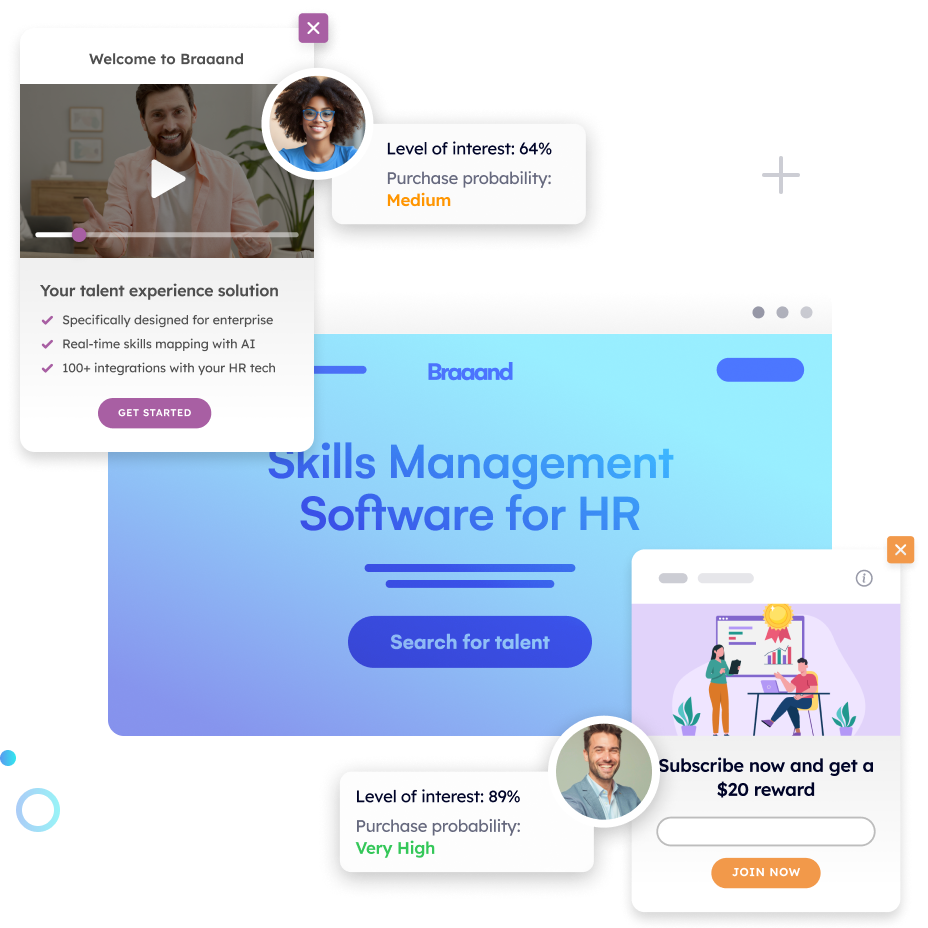
Rick: Pathmonk is the AI for website conversions. With increasing online competition, over 98% of website visitors don’t convert. The ability to successfully show your value proposition and support visitors in their buying journey separates you from the competition online. Pathmonk qualifies and converts leads on your website by figuring out where they are in the buying journey and influencing them in key decision moments with relevant micro experiences like case studies, intro videos, and much more.
Stay relevant to your visitors and increase conversions by 50% by adding Pathmonk to your website in seconds by letting the AI do all the work, and increase conversions while you keep doing marketing as usual. Check us out on pathmonk.com.
Hey, everybody. Welcome back to Pathmonk Presents. Today, we’re joined by Jana. She’s the marketing manager at QRA Corp. Jana, welcome to the show.
Janina Jay: Hi. Thank you. Thanks for having me.
Rick: Glad to have you and excited to get started. We get things going. We’re just talking about things, about the weather and everything else, offline. But now, Jana, we get to the meat of things. Yeah.
If we start with the basics maybe, Jana, what’s the heart of what your company does? And if you were to explain it to a friend over coffee, how would you describe what you do?
Janina Jay: If I explain it to my husband, I usually start with some of the clients we have, which I can’t unfortunately share here, but we’ve got some really fun clients.
So what we do is we’re the intelligence layer in requirements. So anything from airplanes to pacemakers to even my watch that tracks my exercise has requirements in it. And most of the times they’re not correct, they’re not complete, they’re ambiguous. So I know what I wanna say, but whoever’s receiving the information may not understand.
And what’s happening now with everything in AI is that generation tool that we’re all using on some capacity is making the requirements generating a lot quicker, but it’s just moving that bottleneck down the line where now people have to review it for those same accuracies that they always had to check before.
And so what we do is we split it into kinda two pieces over a layer. And so what generation does is what we call the scribe, and we also have a scribe in our system. But our scribe is held together by standards and parameters or guardrails. It’s what would we like to say within what your preferences are, industry benchmarks, and things like that.
And then we have the gavel. And what the gavel does is it makes sure it’s deterministic, it’s accurate, it can be presented and audited. And a lot of times what people are trying to do is put the gavel into the scribe, but it kinda takes away the whole essence of what the scribe should be doing, which is generation.
So we offer the scribe, the gavel into one tool stack. And then the bottom layer there that oftentimes gets missed, even just in general life, is the tacit knowledge, so that expertise that lives within those engineers. And so we build everything, I kinda mentioned that, on that framework to make sure that we have incorporated that knowledge within the system itself.
And so what we do is we offer that governance layer and requirements, in regulated engineering.
Rick: Okay, perfect. Now, for the layman, like myself, ’cause I think that’s really interesting. But one of the things that I try to understand, more than anything, if I’m one of your… and let’s get into the marketing lingo, if I’m your ICP, right? Yeah. I would know all of this pretty much already. But if I’m outside of this, and I come to you, what’s the key problem you help me solve, and what kind of experience can I expect when I work with you?
Janina Jay: Yeah. So there’s different layers, I would say, to the ICP. So there’s obviously the ICP that uses our tools, which are the system engineers that have to either write or take the requirements.
So we work with different organizations that are in different areas within the development process. So some of them take vendor requirements and then have to process them and build whatever’s needed, and vice versa. Sometimes they build the requirements, and then they send them further down. So they both have the different sides to the same coin.
So if the requirements are not accurate, they’re not correct, it’s either gonna cause a headache for the people that are receiving the requirements and have to build something, or the people that are writing the requirements then sending them off and say they sent them off to somebody said, “This is how I understood it,” the contractor, and they’re saying, “That’s not what I meant,” and then you have a whole other issue.
And then you have the organization itself, where you have multi, even in some cases, billion-dollar problems that stem from a faulty requirement. And so that’s the other ICP layer to all of this.
Rick: Gotcha, okay. That’s interesting. See, you change the angle just a little bit, and this description becomes a little bit different.
It reminds me of a YouTube channel of all things that explains… there’s a segment in it that explains really hard to understand things, something about physics or the universe, whatever. They will do different types of explanations based on age, right? So explain it to me like I’m five, like I’m 10, like I’m a PhD. And it’s the same thing essentially, but it gets explained differently depending on what angle you’re choosing.
But thanks for that. Thanks for the added context. That was really interesting. Now, stay on that topic. Stay on the ICP, if you will.
How will these people discover you guys? Are there any channels at the moment that have become your go-to for bringing in more of them? How is it working as far as channels and marketing for you?
Janina Jay: Yeah. So this is part of the job that I absolutely love because, small tidbit about me, I thought I was gonna be a detective when I was a child, and I realized I actually don’t wanna do the work. I just wanna solve the mysteries. I think a lot of people have gone down that route now with all the podcasts.
But our ICP, and we joke a lot, myself and the CEO, is the CEO. And he’s got every sort of privacy setting on his devices, and he’s not active on LinkedIn, and he’s not here or there.
And so it’s really for us a layered system, and we have to be very intentional. But we also have to be intentional with how we talk, like you just explained. So I find sometimes, depending on the channel, we will try different methods, whether it be humor, because I think at the end of the day, I think we’ve all seen that, I’ve seen it on LinkedIn at least, where it’s like this is how B2C would sell a product versus this is how B2B sells a product and it’s fun, flashy, cool, and then there’s just like features.
And so I feel that hits home for me. And I think at the end of the day, we’re all people and we could all use a little humor in our day-to-day life, and we all have frustrations and let’s play into that a little bit, especially on things like LinkedIn or on things like paid media where maybe it kinda stops you for a second.
So we’ve definitely taken a very layered effect. When I do things on LinkedIn, it’s never like a brand campaign. It’s always more so here’s a webinar or here’s a piece of content that we think you’d really like to digest, and that’s the focus we have. And then as I said, like with paid media, let’s try some YouTube, let’s do some short clips, let’s have some humor into it.
So just trying different areas. We’re also really leaning, and I think not just us, back into newsletters. So I’ve found, we’re going back a few years now, with the explosion of AI, to start talking to people again where they’re at, and having those genuine just conversations like you and I are having right now.
So whether that be looking into conferences that we should be attending again, which I thought I’d never say after COVID, and newsletters, which I also thought was slightly in my past, but it is because people are trying to get that human connection. I think a lot are still working remotely.
Other areas that we’re looking into is how can we create groups for these people where they feel comfortable asking each other questions. So even though they might be working completely different companies, they probably are running into similar problems, and what tips and ideas could they share?
So at the end of the day, it’s creating that thought leadership space for others, and working there, because our people aren’t readily available, and I sometimes have to hunt for them.
Rick: No, that makes sense, especially the point about using humor and that human connection. You have to think about, and I realized this on myself, I’m watching a Netflix show with my wife, for example, right? And what’s catching my… Of course, the show is interesting, and we had a point where there’s a description with the ads included.
But actually quite clever the way they insert the ad in the context of the show being on pause. Maybe they talk about snacks or whatever, and actually, I don’t mind it. I don’t mind it. In fact, we stayed on it for a little while before upgrading.
But using humor, using what people pay attention to outside of work makes a lot of sense, right? ‘Cause people might be… Even the busy CEO might be scrolling on Instagram, for example, or, God forbid, TikTok, but they’re gonna use social media or maybe watch a YouTube video.
And so it makes sense that you try to include that language in a way or that humor so that you grab their attention, then okay, there you go. Now, they’re at least aware of you guys.
Janina Jay: Yeah.
Rick: So that’s… No, that’s a great point. Now, I’d be remiss if I didn’t touch on this because Pathmonk is a website AI tool.
I do have a question about your website, and the question’s quite simple actually. How much of a role does the website play in pulling in more of those ICPs, if you will? And is there anything about it that you think really works at the moment when it comes to converting them?
Janina Jay: Yeah. So our website is a funny story, ’cause we’re currently switching it over.
So I can definitely say what has worked in the past versus what we’re working towards in that inflection point, and a lot of that also has to do not only in the direction of marketing, and I think we’re all learning so much. I know I am daily, weekly, something new is coming out on how to change things.
But more so with our product, so where the direction of the company is going. And we’ve always tried to talk, and I’ve touched on this already, talk the way that our customers talk, and really speak in their terms and try to figure out how can we relate to them, whether it be speaking to their problem set or their solutions or what they’re looking for or trying to anticipate some sort of questions they may already have.
And so the website is very much structured that way, and it will be going forward that just the conversation that we’re having is shifting from more so of “Here’s a tool,” versus, “Here’s an actual layer that we’re working within,” especially as you guys, the customer, are using AI more in your day-to-day, and you have to meet different regulations and things like that.
So our website has to be updated in that sense, but I still think you need to be constant so that they know who you are. You need to have that uniqueness to your tone, whether that be humor in a space that isn’t always considered funny, to have a bit of a genuine touch to it.
So I’m really lucky ’cause our CEO is really in that space, and I’m usually in awe of the people that I sit around the table with, I say virtually, around the table with at my company, and listening to the intelligence that they bring into the conversation, the knowledge that they have in this space, and not just within regular requirements but also within AI itself, and bringing that into the website.
So when people come to the website, yes, obviously we’re here, we’re selling something, but we also have an abundance of knowledge built on top of that. And I think that’s what our website does well and will continue to do well, whether our direction of the company changes or not.
Rick: Oh, nice. So yeah, there’s a big chunk of education going on also around all of the product suite. And that is essentially what you guys offer, around your offering and the messaging. And we go back to the humor, which connects, so makes a lot of sense.
Now, I would like to switch gears for a second here, Jana, and maybe talk about you as a leader, maybe get into the nitty-gritty of what you do on a daily basis, if you don’t mind.
And essentially it’s just trying to understand more about what’s your daily focus like. When you get to work, what are the main things that you focus on? And let’s say, what’s a day in the life of Jana like?
Janina Jay: Yeah. No, I’d love to. Yeah, that’s a good question. So it changes. I think a lot of us in this level, in this industry are changing what we do on a day to day.
So usually what I’ll look at it is at a week, and I like to schedule in my calendar what those chunks look like. And I always tell the team, “This is just my placeholders for me to look back onto. Feel free to book meetings throughout this.” But it just helps me to really center myself and focus on what I need to focus on.
I also have a fantastic C suite that really encourages me to step away from my desk and take a moment if I need to and just disengage with what’s going on in the day-to-day so I can really focus on education or knowledge or whatever I need to take in so I can share.
I think right now, I know right now, a big piece of me is learning what’s happening behind the scenes, especially with all the updates on Google, but also the psychological side of things.
So how are people reacting with what’s happening out there? And seeing how I can reframe that in what I’m working with that week. So obviously, the website is a huge lift. Okay, that might change depending on what I’ve learned, so maybe I’ll change the copy or the framework of it, or whatever that looks like based on what I’m learning.
So a huge part of my weekly piece is A, learning what’s happened. B, how does that psychologically affect people? And you can always check on, as you said, on your socials and see what’s the chatter going on. Especially I find Threads is really good for that to see, like, how are people reacting to different changes that are happening.
So I’ve had a lot of people say, “I’m not gonna use Google anymore ’cause I don’t want the summary. I’m gonna go to DuckDuckGo,” or whatever that looks like. And for me to go, “Okay, I need to look into that,” so what does that mean on my side? And then changing the levers.
So it’s a lot of education. Right now it’s the website, so that’s gonna come and go because I think you always need to tweak a little bit of your website. I don’t think it’s ever done. And then lever pulling is a huge part of my weekly to-do.
And then we also try to write a piece of content every week or two. I don’t write content just to write content, so a lot of that is based off of conversations that we’re having with prospects and customers. And if there’s something new that’s happening in the space that I think nobody else has written about that yet, I’ll take some time to really dig into that or talk to my CEO, and he and I will kinda figure that next step out and write a piece for the prospects and the customers, and then put that in our biweekly newsletter.
Rick: Okay. It’s really interesting how you use the content consumption side of things. Yeah. ‘Cause it’s not like a passive way to do it. It’s more like you’re looking for the nugget, you’re looking for something that you can turn into an insight for a potential customer or your existing customers.
It sounds like you’re doing the same with the calls. Yeah. So those phone calls that… That’s a great way to do it. Hats off to you ’cause I see, sometimes, I go ahead and ask, I would ask you, in fact, what kind of content you consume and… But there’s an intentionality behind it that makes it so that you’re just not doom scrolling on your phone because you’re now doing marketing, right?
Janina Jay: Yeah.
Rick: You’re actually proactively going and looking for little gems in there so you can then turn them into the good stuff. So thanks for sharing that. I think that’s gonna be useful, not just for myself, but also for the listeners here.
Maybe we stay on that topic for a second, Jana. We talk about the flood of content that is out there. How do you stay on top of things amidst all the chaos? ‘Cause I know for myself personally, I open YouTube, I open LinkedIn. It’s oof, it’s a lot of stuff.
And so how do you filter through it and do you search for specific… Maybe there’s people you turn to, influencers if you will. How does it work for you at the moment?
Janina Jay: I think having ADHD helps because I like to have multiple tabs open in my brain, not just on my computer screen, so that does help.
But I genuinely love marketing. I’m one of the few, I think few people who I feel very lucky to love what I do every day, and I love the company I work for, which helps. I always joke that I don’t get the Sunday scaries. And my partner’s a… like my husband’s a carpenter, and he genuinely loves being a carpenter.
So a lot of times you’ll see us, once the kids go to bed and you need five minutes to decompress from the day, but he’s watching carpentry influencers, and I’m sitting there going on socials. And a lot of times it’s Threads ’cause I find Threads for me, I can pick a thread and then go through it that way.
When it comes to LinkedIn, I do follow a few people and I don’t remember their names. One person stopped posting as much, and I did really genuinely love his little… He had five-minute podcasts on a weekly basis, but he switched organizations and he’s posting a bit less.
I loved his stuff because again, like you said, it’s like we’re so used to being inundated with messages, but we’re also so used to doing it very quickly, so I really appreciated a five-minute, “Oh, this is an interesting thing. I’ll save this and come back to it,” and I usually did.
I find with LinkedIn, I enjoy almost the discussion piece in the comments more than the actual post itself because I find a lot of times you’ll get a more balanced view there and you’ll see how people have maybe potentially implemented this and whether it worked or didn’t and why, and then you can take some of those pieces of information back to yourself.
When it comes to YouTube, I’ll usually search a topic and then find if there’s a panel discussion. And again, I like panel discussions more so than a presentation from one person being like, “This is how we do things,” because again, the rounded viewpoints on a panel discussion I find really useful.
Or if it’s a very specific topic that I’m really trying to dig into that I want to be educated on, then I’ll go into that. And I’m trying to think what other medias I look into. I do follow a few marketing profs and things like that ’cause I did take courses with them in the past, so if there’s something topic.
But I’m my worst enemy when it comes to webinars, so I’ll sign up for them and I will not attend any live. I just want the recording so I can watch it at my own free time.
Rick: I feel you. Yeah. That’s, again, the double-edged sword of so much content that we have, that you can pick and choose, and if you only pick one, then maybe books are a good one because then you don’t jump as much, but it’s not as interactive and the sights, the sounds, and it’s different.
But I appreciate you sharing this kind of way of working with it. Now you talked about the five-minute format that this person has. Now that’s just about as long as we have left in the podcast. So if you don’t mind, Jana, we go into what we have. This is a rapid-fire segment. We have about three questions that we wanna ask you, that I wanna personally ask you. So are you ready for it?
Janina Jay: I think so.
Rick: All right. All right. Let’s do it. When it comes to content, staying on that topic, do you prefer watching, listening, or reading?
Janina Jay: Ooh. Reading?
Rick: Okay.
Janina Jay: Yeah.
Rick: Yeah, sure. What’s the latest piece of content that you picked up? It could be a book, since you said reading, or an article that you saw was interesting, and was there any gem that really stuck with you in it?
Janina Jay: What’s the latest one? I’ve started reading an article. I haven’t finished it. I just started it yesterday. It was about the update on Google, so the fact that the blue links are going down, and it was called The End of SEO, I think, or Paid Media or something like that.
And so I’ve started reading that and really digging into what that actually means versus just clickbait. So I would… That was an interesting one ’cause those type of things make you think, right? So that would be a piece that… I think it just came out too, so I feel like if other people searched it, they would easily find that article.
Rick: Don’t we all like a little doom and gloom type of… It’s the end of SEO. But with that said, what is the… No, let me rephrase this in a second. So if you had a magic wand, and you could fix one frustrating thing in your marketing life with that, what would you pick? What would you fix?
Janina Jay: It’s gonna sound really bad, and I don’t want it to be controversial, but paid media as in Google Ads and things of that nature, ’cause I feel it’s so much lever pulling. And at the end of the day, it would be great if those levers would pull themselves.
Rick: Okay, fair enough. And I guess in a way, this might answer my next question, but if there was a task that you could put on autopilot forever, what would it be?
Janina Jay: Ooh. That’s a hard one. I think if I trusted the thing that was doing the task, it would be to feed me the articles that would give me the piece of knowledge I’m looking for, versus me going to look for them. If I trusted it and I didn’t feel like they were missing things.
Rick: A little bit of mind reading in there, too.
Janina Jay: Yeah, exactly.
Rick: Fair enough. Jana, again, thanks a lot for being on the show with us today. I really enjoyed our conversation. I also wanna give you the last word before we wrap everything up. If someone forgets everything about the interview today, which I doubt, but what is the one thing that they should remember about your work and the work you’re doing at QRA Corp?
Janina Jay: Beyond the fact that I think we’re building a really cool product that’s gonna save a lot of headache and addresses this whole consumption of AI, whether good or bad, and putting the guardrails around it, I would say the big thing is have a little fun with it. We’re all people, and no matter how black or white your messaging feels, you can add a bit of color to it.
Rick: That much was clear from just this interview, Jana, so I really appreciated your insights and what you shared with us. I hope our listeners will enjoy it as much as I did.
And if people want to check you guys out, if they wanna see what QRA Corp is all about, how can they do it? Where can they go?
Janina Jay: So qracorp.com is our website, and we have our socials on there as well, but essentially anything where you type in QRA Corp on YouTube, we’ve got all our videos up there, as well as some really cool and interesting YouTube discussions that we host as well in that space. So I would say our website and our YouTube channel would be a great place to start.
Rick: Too easy. Too easy. Okay. Jana, again, thanks for being on the show today, and I wish you a wonderful day.
Janina Jay: Thanks for having me.
Rick: Of course. Bye, everyone.
Janina Jay: Bye.